

El Salvador remains world’s leading government-led crypto experiment
19.03.2026 12:52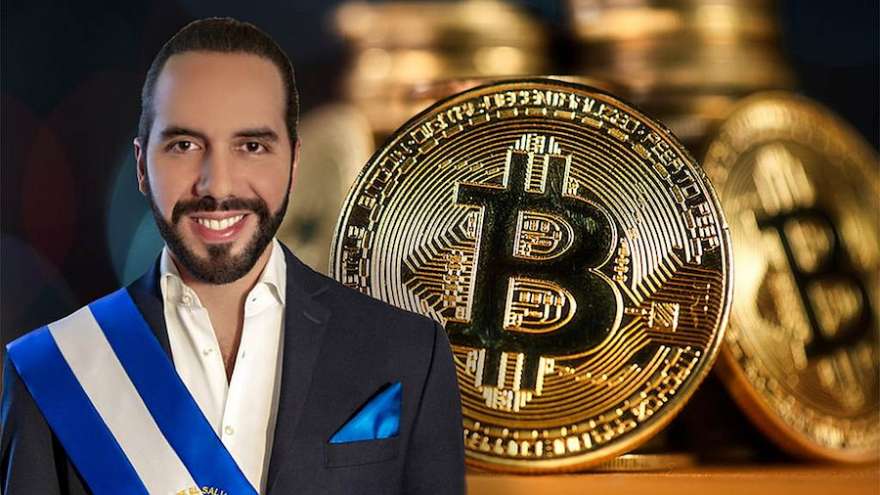
El Salvador remains the world’s leading government-led crypto experiment: after President Nayib Bukele recognized Bitcoin as legal tender alongside the dollar in 2021, the country has made cryptocurrency a part of its economic and political identity. However, in January 2025, the country’s parliament swiftly amended the Bitcoin law following a $1.4 billion agreement with the IMF: accepting BTC became voluntary for the private sector, while the government made it clear that it would not abandon its strategy of accumulating Bitcoin in reserves.
In essence, El Salvador now operates under a hybrid model. Bitcoin is no longer imposed on businesses as a mandatory means of payment; taxes must be paid in U.S. dollars; and the state’s role in the Bitcoin project itself has been formally limited by the terms of the IMF program. The fund’s materials explicitly state that amendments to the law removed key features of mandatory legal tender: accepting BTC became voluntary, paying taxes in Bitcoin was abolished, and the public sector’s involvement must be restrained.
At the same time, Bukele and his team have not abandoned the crypto initiative. As early as December 2024, the National Bitcoin Office stated that the country would continue to purchase BTC for strategic reserves, and in August 2025, Reuters reported that El Salvador already held approximately $682 million in Bitcoin and was transferring reserves from a single address to several new wallets to enhance security and transparency. The Bitcoin Office’s public tracker remains active, and industry aggregators citing the office’s data currently estimate the country’s holdings at approximately 7,500 BTC.
In terms of the actual use of cryptocurrency within the country, the experiment has become much more pragmatic than it was in 2021–2022. Formally, Bitcoin has not disappeared from the government’s agenda, but the practical model has shifted from the idea of “Bitcoin as everyday money” to the concept of “Bitcoin as a reserve and image asset of the state.” This allows El Salvador to maintain its status as a global crypto icon without directly conflicting with the terms of international financing. This conclusion follows from a comparison of the January amendments, the terms of the IMF program, and subsequent government statements regarding the continued accumulation of BTC.
At the macro level, the country’s financial situation in 2025 appeared more stable than in previous years. The IMF approved a 40-month $1.4 billion EFF program for El Salvador, and the total expected external support package was estimated at over $3.5 billion. Following the first review of the program, the Fund reported that key fiscal and reserve targets had been met and announced the allocation of an additional $118 million, bringing the total amount of funds already disbursed to approximately $231 million.
The economy is not in crisis, but it is not experiencing explosive growth either. According to IMF estimates, El Salvador’s GDP is expected to grow by 2.5% in 2025, and the World Bank anticipates similar growth in 2026. Inflationary pressure remains moderate: the World Bank noted that inflation fell to 0.9% in 2024, and in 2025, prices remained generally stable compared to the first half of 2024; the IMF projected inflation of around 1% in 2025.
Fiscally, the country also looks better than it did a couple of years ago, although the debt burden remains high. The World Bank noted that El Salvador’s public debt peaked at 88.9% of GDP in 2024. At the same time, the government is implementing strict fiscal consolidation: the IMF expects a primary surplus of 1.9% of GDP by the end of 2025, and sovereign spreads, according to the fund, have narrowed from over 700 basis points at the end of 2023 to approximately 390 b.p. b.p. in June 2025.
The bottom line for the crypto market is this: El Salvador no longer looks like a country where Bitcoin is set to replace the dollar in the everyday economy, but it remains a country where BTC is embedded in the state strategy, national brand, and reserve policy. For the market, this is an important signal—Bukele’s model is not dead, but has transitioned from a phase of radical experimentation to a phase of more cautious, yet still demonstrative, crypto sovereignty.
Теги: El Salvador the crypto experiment Переглядів: 609